PECA Act Explained: SIM Crime Sections [2026]
The peca act, the Prevention of Electronic Crimes Act 2016, is Pakistan’s cybercrime law. For a SIM citizen, two sections matter most: section 17, which makes unverified SIM issuance a crime, and section 16, which punishes unauthorised use of your identity information. It is legal information, not legal advice.
Quick answer: peca act
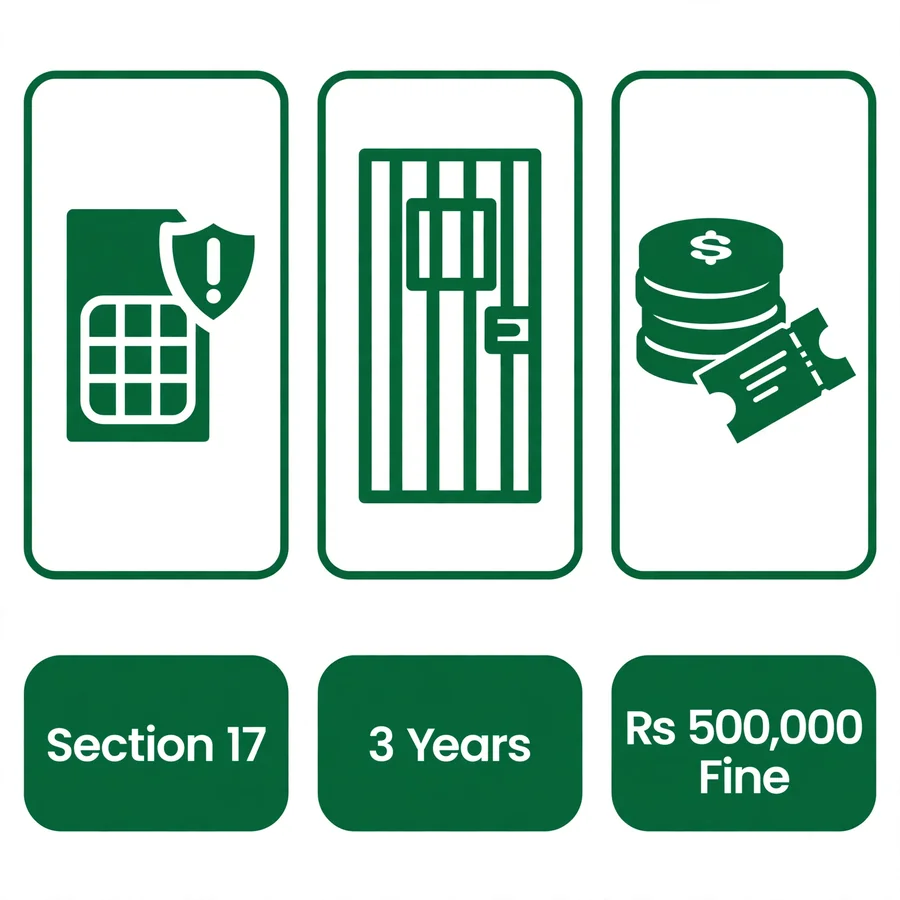
- Section 17: issuing a SIM without PTA-approved verification: up to 3 years and/or Rs 500,000.
- Section 16: using someone’s identity information without authorisation: up to 3 years and/or Rs 5,000,000.
- Who investigates: the NCCIA; FIA’s Cyber Crime Wing was abolished in 2025.
- PTA fines: a separate regulatory lane, not PECA.
The Crime at the Centre: Section 17
Section 17, unauthorised issuance of SIM cards, covers selling or providing a SIM card, R-IUM, UICC or other authentication module without obtaining and verification of the subscriber’s antecedents in the mode and manner approved by the Pakistan Telecommunication Authority. Biometric verification is that mode: up to 3 years, or Rs 500,000, or both.
The trigger other guides miss: under section 43, the agency can take up section 17 only on the Authority’s (PTA’s) written complaint. Reporting a rogue seller to PTA is not paperwork beside the case; it is what lets the NCCIA take the case up. Your remedy: disown and block the SIM.
The Sections Around Your SIM
| Section | Offence | Penalty |
|---|---|---|
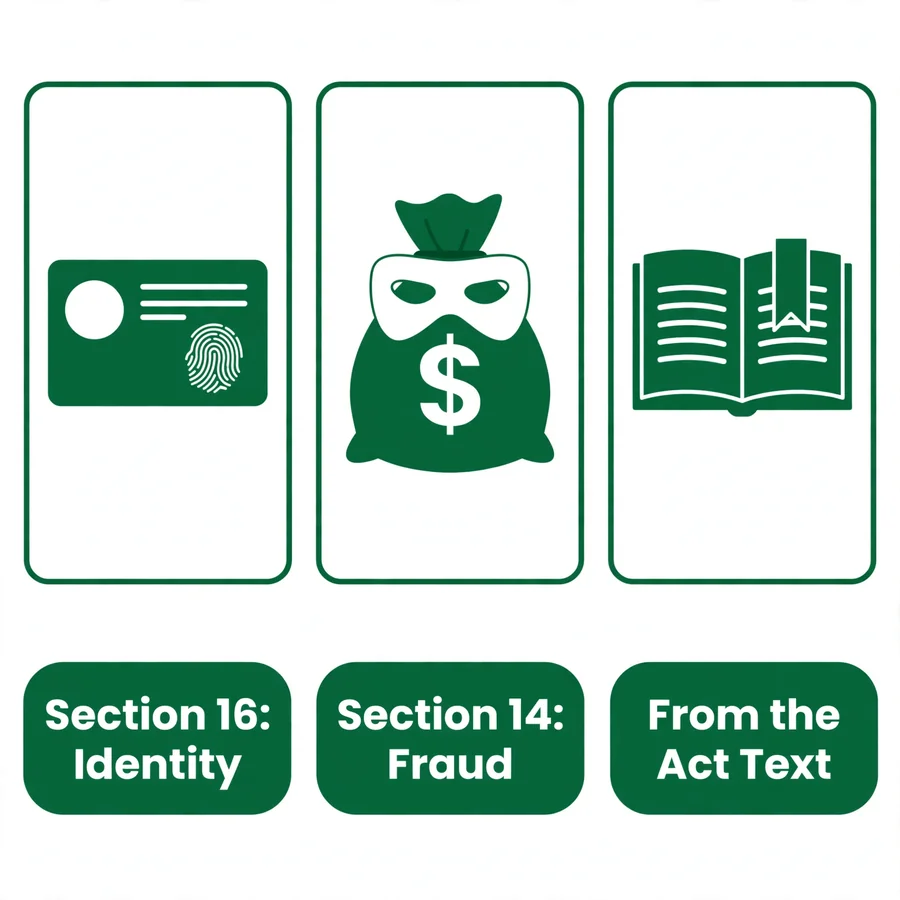
| 16 | Unauthorised use of identity information | Up to 3 years and/or Rs 5,000,000 |
| 14 | Electronic fraud | Up to 2 years and/or Rs 10,000,000 |
| 13 | Electronic forgery | Up to 3 years and/or Rs 250,000 |
| 18 | Tampering with device identification | Up to 3 years and/or Rs 1,000,000 |
| 25 | Spoofing | Up to 3 years and/or Rs 500,000 |
| 41 | Confidentiality of information (insider leak) | Up to 3 years and/or Rs 1,000,000 |
Penalties from the consolidated Act text (2023 and 2025 amendments), accessed 21 October 2026. Under section 43 most offences are non-cognizable, bailable and compoundable, but sections 13 and 14 are cognizable, non-bailable and non-compoundable since 2025, so account-emptying swaps run as fraud and forgery. Section 32 keeps traffic data a minimum one year, released only on a court warrant; section 45: court-ordered compensation to the victim.
Two Lanes: PTA Fines vs PECA Prison
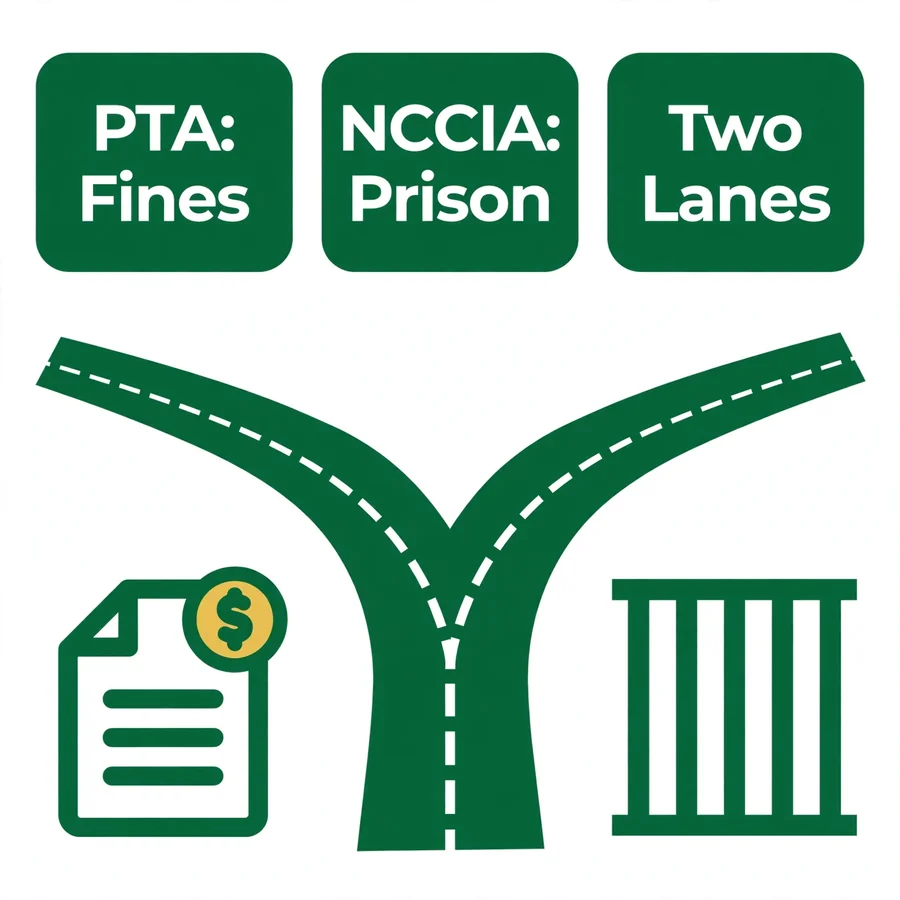
PTA’s lane is regulatory: under the Pakistan Telecommunication (Re-organisation) Act 1996 and the SAV Regulations it fines companies. The Rs 77.8 million per case fines in the October 2026 swap cases came under Regulation 4(4): the operator is solely responsible for its SIMs. A fine on a company, NOT a PECA penalty; no PECA fine comes near it.
PECA’s lane is criminal: the NCCIA investigates, courts punish people. The swap cases ran in both lanes: operator fined, complaint to the NCCIA, banks ordered to reimburse. No report names the PECA sections in those FIRs, so none are invented here; on the reported facts, the sections such a case engages are 17, 16, 14 and 13.
What Changed in 2025 (and What Did Not)
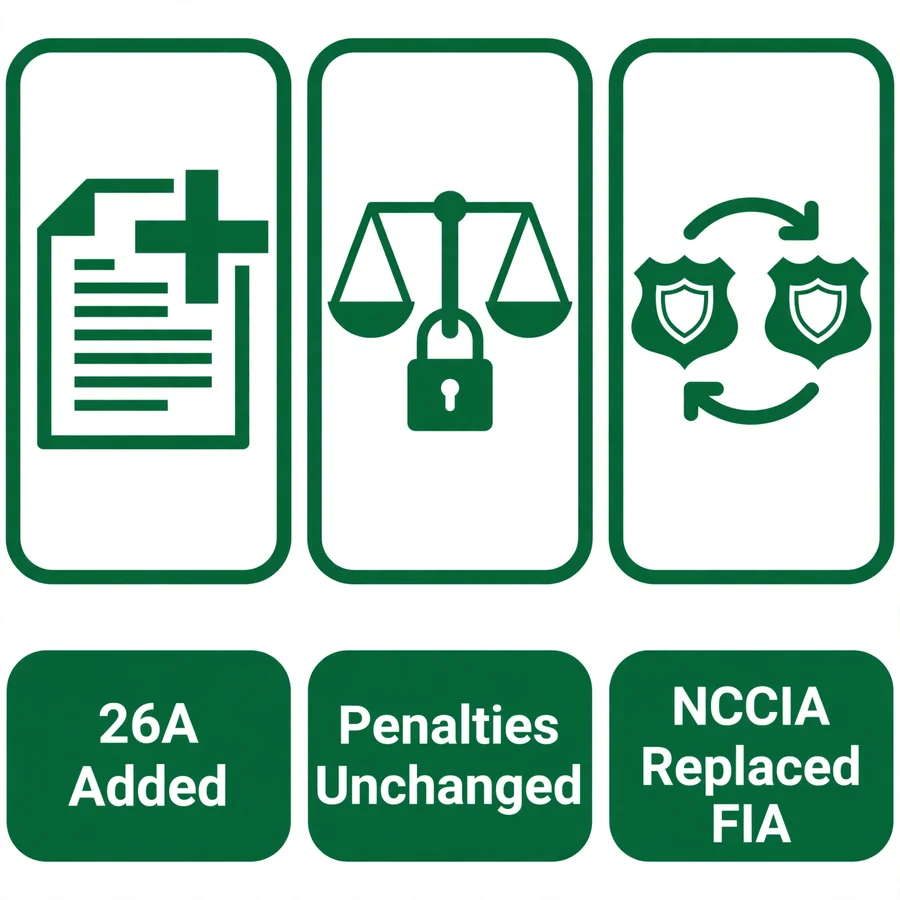
The PECA (Amendment) Act 2025, Act No. II of 2025 (assent 29 January 2025), added section 26A on false and fake information (up to 3 years and/or Rs 2,000,000), created the SMPRA, and substituted sections 29 and 43, section 29 establishing the NCCIA and abolishing the FIA Cyber Crime Wing.
What did not change matters more: sections 16 and 17 penalties are unchanged since 2016; claims that the amendment raised SIM penalties are wrong. One trap, honestly graded: ‘Authority’ now means the SMPRA, yet section 17 names the Pakistan Telecommunication Authority, so the working route stays PTA plus NCCIA; who accepts a section 16(2) application is unverified.
If a SIM Was Issued in Your Name
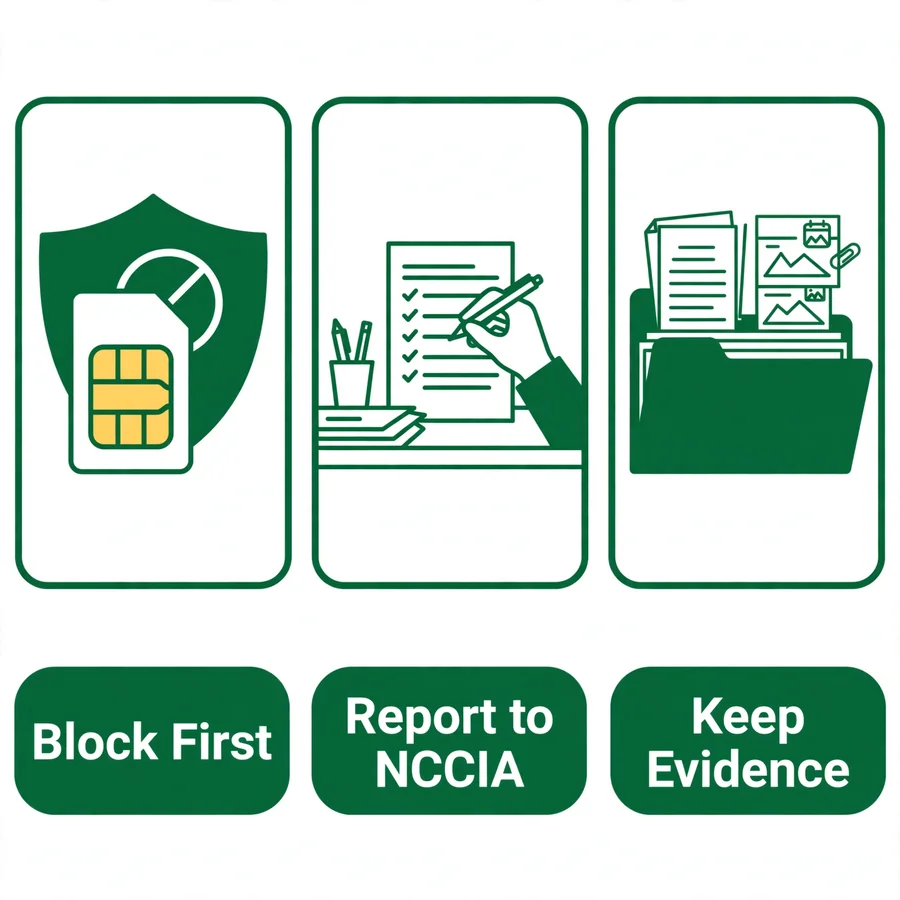
Section 17 reaches whoever sold the SIM without verified antecedents; section 16 reaches anyone who obtained, sold or used your identity information without authorisation. Move one: block and disown the SIM via the operator and complain to PTA, whose written complaint makes section 17 cognizable. Move two: complain to the NCCIA via its reported channels: complaint.nccia.gov.pk, helpline 1799, helpdesk@nccia.gov.pk.
Move three: keep evidence dated and unedited: 668 and portal counts from the day you found it, the operator issuance record (outlet, date, verification trail), any fraudster SMS. Section 45 compensation can follow any sentence. This page is legal information, not legal advice; a live case deserves a lawyer.
FAQs
Is selling a SIM without biometric verification a crime?
Yes: section 17 requires PTA-approved verification before any sale; biometric verification is that mode. Skipping it risks up to 3 years and/or Rs 500,000.
What should I do if I find an unknown SIM registered on my CNIC?
Block and disown via the operator, complain to PTA (the section 17 trigger), file with the NCCIA.
What is the punishment for SIM swap fraud in Pakistan?
No swap offence exists: a case engages sections 17, 16, 14 and 13. The ‘7 years and Rs 10 million’ figure matches no SIM section.
What is identity theft under PECA?
Section 16: obtaining, selling, possessing, transmitting or using another’s identity information without authorisation: CNIC numbers, fingerprints, OTPs. Up to 3 years and/or Rs 5,000,000.
Is the FIA still involved in cybercrime?
No. The FIA Cyber Crime Wing ceased to exist in 2025 (section 29(5)); the NCCIA investigates now.
Is it legal to check someone’s SIM owner details in Pakistan?
Not for the public: law enforcement obtains it under section 54 of the Telecom Act. Owner-details sites operate outside the law.
Can I legally check the SIMs registered on my own CNIC?
Yes: your own counts via 668 or the portal.
Where can I report illegal telecom data sales or a suspected data leak?
The NCCIA (section 16; section 41 for an insider leak), and PTA: the August 2026 data-sale arrests followed a PTA complaint, as reported.
What evidence is important in cyber-crime complaints?
Dated 668/portal screenshots, issuance record, complaint references, bank alerts. Section 32 data moves on a warrant: complain early.
Pakistan mein ab cyber crime complaints kaun sa idara handle karta hai?
Ab complaints NCCIA handle karta hai; FIA Cyber Crime Wing 2025 mein khatam ho gaya. Portal complaint.nccia.gov.pk, helpline 1799. Regulatory shikayat PTA ke paas rehti hai.
Conclusion
The peca act gives a SIM citizen section 17 against the seller, section 16 against whoever used the identity, one investigator (the NCCIA), one trigger (the PTA complaint). Keep lanes apart; keep evidence dated.



4 Comments